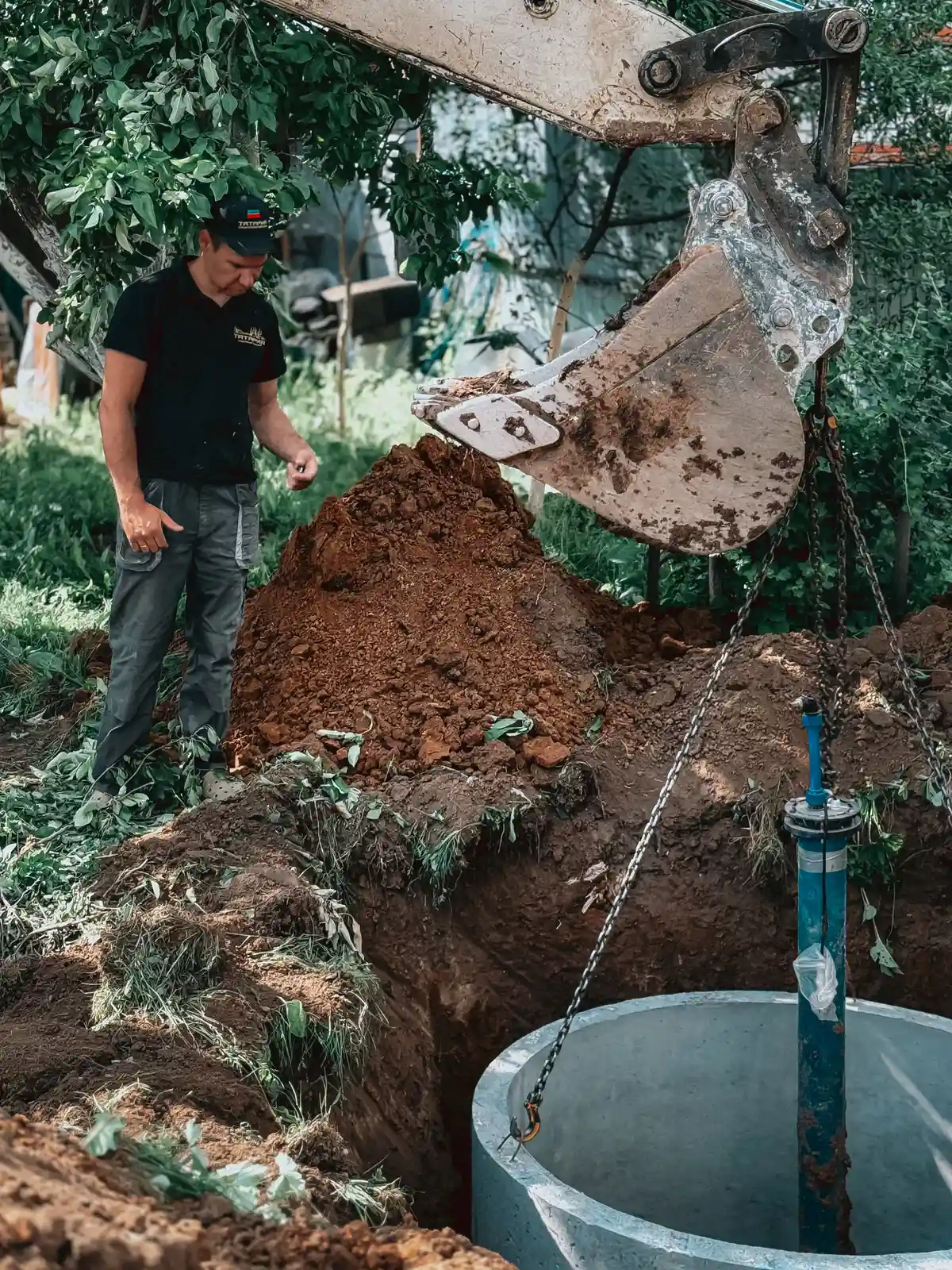
What is a septic tank riser?
A septic tank riser is a length of large-diameter pipe — usually 12 to 24 inches across — that runs from your septic tank’s access port up to (or just above) ground level. It replaces a buried lid with one you can actually reach, so every inspection or pump-out starts with popping a cap instead of digging.
Without a riser, the only way to reach the tank is finding it (often from old permit records, since the tank itself sits fully buried) and excavating a foot or more of dirt over the access port — every single time. With one in place, that same trip is a lid, not a shovel.
Why you need one
A riser is not required on every system, but it earns its cost fast:
- Cheaper pump-outs. A buried access port typically adds $100 to $200 in dig fees to every visit — a riser removes that line item permanently.
- Inspections actually happen on schedule instead of getting put off because someone would have to dig first.
- The tank’s exact location is marked, so nobody guesses wrong and drives a mower or a truck over it.
- Less risk to whoever opens the tank — no heavy buried concrete lid to lift blind.
Ask any septic tech what they’d rather do on a Tuesday: pump through a riser, or spend the first twenty minutes with a shovel guessing where the last owner buried the lid. It’s not close.
Most people wait too long to pump because nothing looks wrong yet — the visible signs of a full tank show up only after it’s already overdue. A riser doesn’t fix that on its own, but it removes the excuse: when checking the tank means popping a cap instead of renting a shovel, there’s a lot less reason to put it off.
Concrete or plastic, and what size
Most new installs use plastic — HDPE or polyethylene — because it’s lighter to work with, cheaper, and doesn’t crack the way older concrete risers can. Concrete still shows up on systems installed years ago and holds up fine in place; it’s just heavier to handle and more expensive to replace if it does fail.
On sizing, the riser’s inside diameter has to match or exceed your tank’s existing inspection port, and Texas code sets that port at a minimum of 12 inches across. Most homeowners land on 20- or 24-inch risers anyway, since the extra room is what actually lets a technician get a hose or tool down into the tank without fighting the opening.
A riser’s material is a separate decision from the tank’s — you can put a plastic riser on a concrete tank or vice versa. If you’re still deciding on the tank itself, see our concrete vs. plastic septic tank breakdown.
How much a septic tank riser costs
Expect $300 to $600 installed for a standard riser and locking lid, with the riser and hardware running roughly $100 to $300 and labor making up the rest. That’s usually a one-time cost — the kind that pays for itself within two or three pumping visits, since a buried port adds $100 to $200 in dig fees every time someone has to find and uncover it.
How installation works
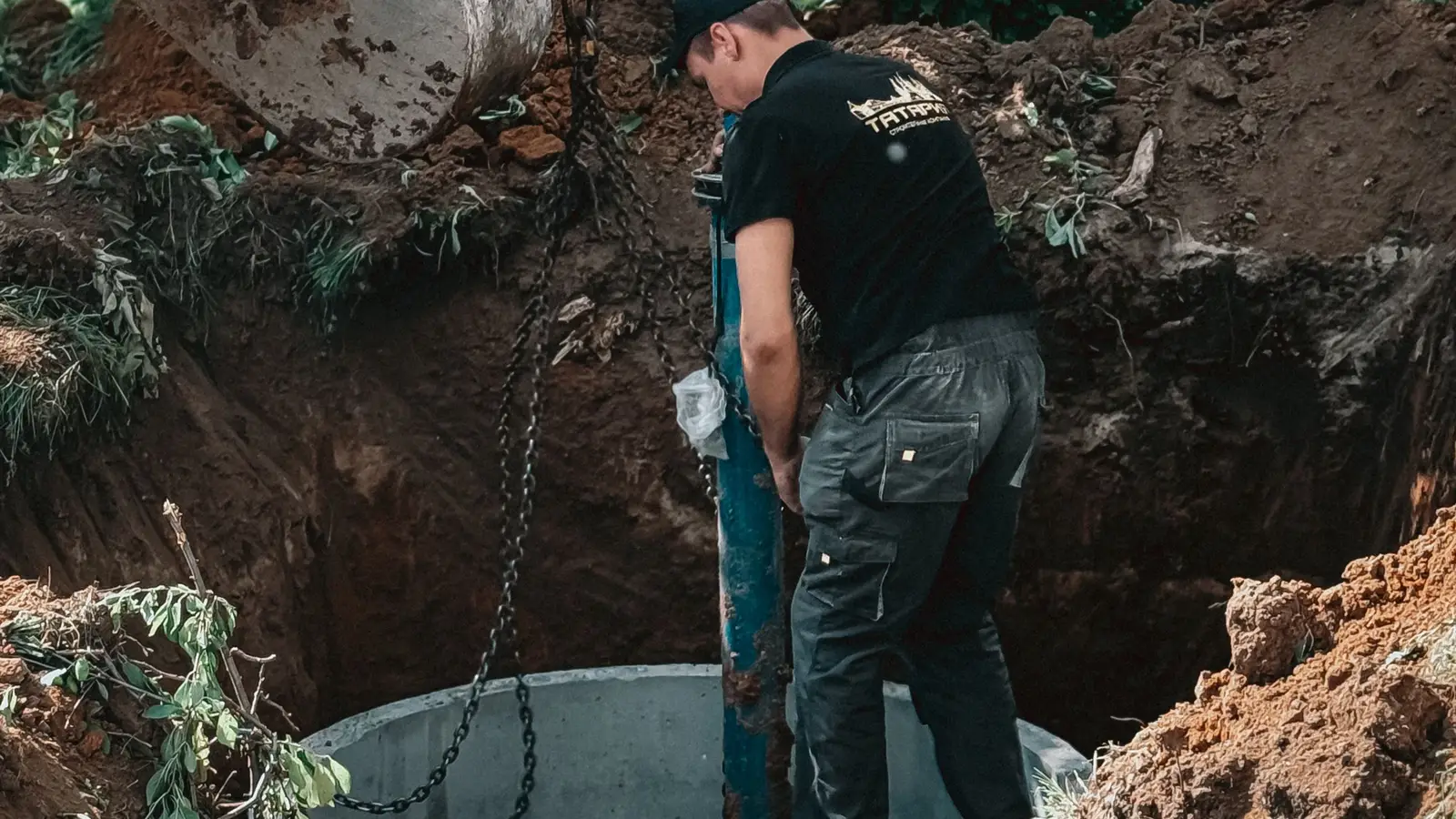
- 01Locate the tank and expose the access portOld permit records or a probe rod find the tank; digging clears just enough dirt to reach the existing lid.
- 02Measure the depthThe distance from the access port to finished grade sets the riser height — Texas code requires the top to sit at least two inches above grade on systems permitted since September 2023.
- 03Cut the riser to height and seal itThe riser is trimmed to length, seated on the tank’s collar, and sealed watertight so groundwater can’t get in around the edges.
- 04Fit a locking lidA bolted or locking cap goes on top — required so the opening can’t be accessed by a child, pet, or anyone who shouldn’t be near it. See our full guide to septic tank lids if yours is cracked or missing rather than just new.
- 05Backfill and grade around itSoil goes back in around the riser, graded so water drains away from the opening instead of pooling on top of it.
A straightforward job runs two to four hours for a crew that already knows where the tank is. If your tank has never had a riser and nobody’s sure exactly where it sits, most installation guides recommend having a professional locate and expose it rather than digging blind.
Texas now requires risers on new installations
Since Texas Administrative Code §285.32 took effect on September 1, 2023, any On-Site Sewage Facility permitted in Texas after that date has to have risers extending at least two inches above grade if the tank is buried more than 12 inches deep. The rule exists for the same reason homeowners add risers voluntarily: buried access ports make maintenance hard enough that it doesn’t get done.
If your system is older than that and was never permitted with a riser, nothing requires you to retrofit one — but the same math that drove the state to require it on new systems applies to yours too. For what a brand-new system costs to put in with risers already built in, see our installation cost guide.
Keeping your riser in good shape
A riser is close to maintenance-free, but a few things are worth checking once a year: the lid still locks and seats flush, the seal where the riser meets the tank hasn’t separated, and nothing heavy — a parked vehicle, a stack of firewood — is sitting on top of it. Concrete risers are worth a visual check for cracking; plastic ones rarely need more than a rinse.
The EPA recommends a full system inspection every one to three years, on top of pumping every three to five. A riser doesn’t change that schedule — it just makes it realistic to actually keep. Get a quote if you want a riser added to a system that doesn’t have one yet.