The short answer
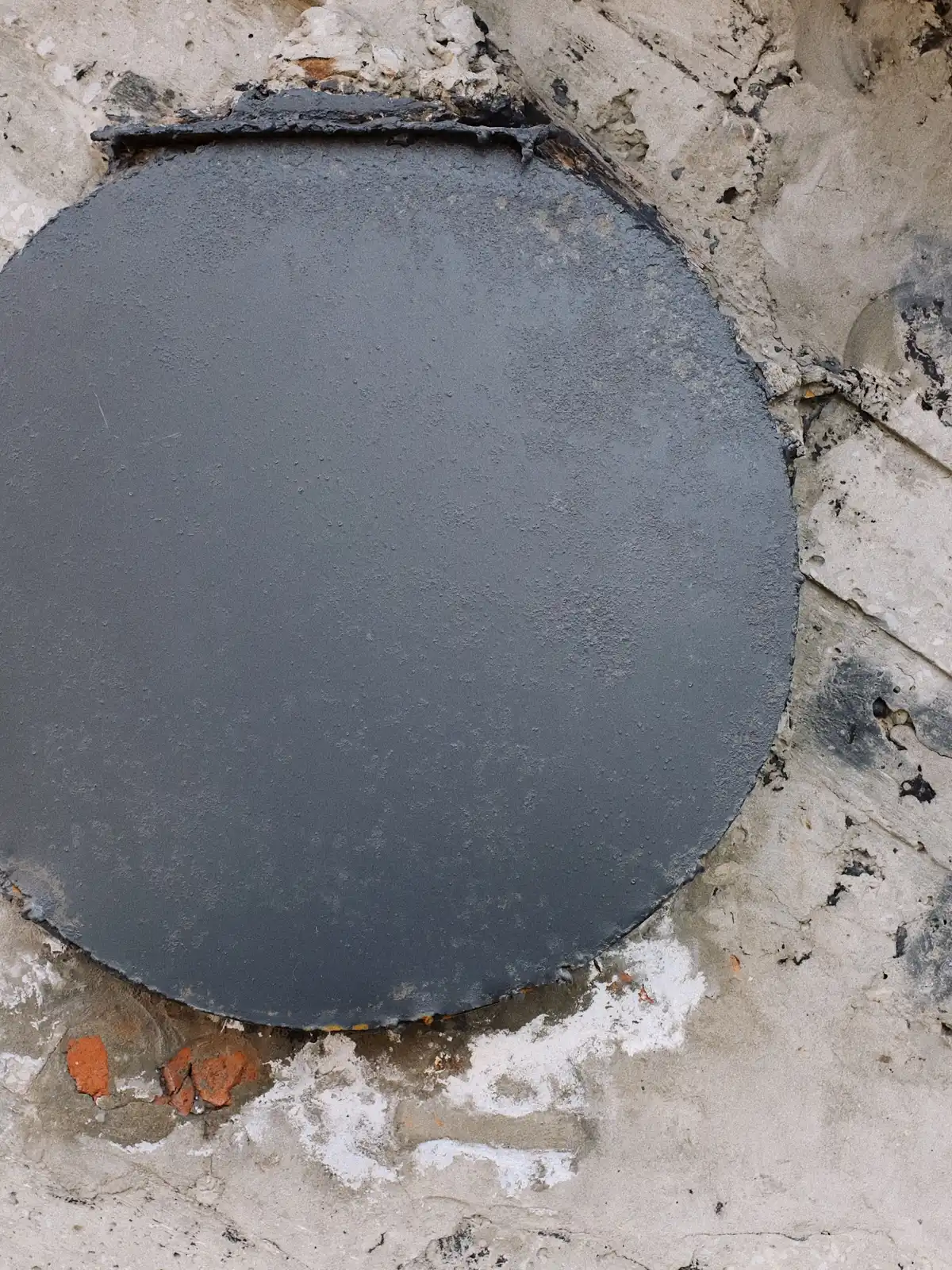
A septic tank lid is the removable cover that seals the tank’s access opening at ground level — concrete, plastic, or fiberglass, usually 21 or 24 inches across. It’s not decorative: a cracked, sunken, or missing lid is a real fall and gas hazard, not just a repair to put off. Replacement runs $150 to $800 depending on material and whether a riser is involved.
Why the lid actually matters
The lid is the only thing standing between an open tank and whoever’s walking across your yard. Underneath it is several feet of drop and sewer gas that builds up fast in an enclosed space — a cracked or collapsed lid isn’t a cosmetic problem, it’s a real injury risk for a kid, a pet, or a lawn crew who doesn’t know it’s there. It also keeps rain and debris out of the tank; a lid that doesn’t seal lets in stormwater that can overload the system after a heavy rain.
Concrete, plastic, and fiberglass lids
Concrete lids are still common on older systems — heavy, durable, but prone to cracking and spalling as they age, the same slow chemical process that eventually wears on concrete tanks themselves. Plastic (usually polyethylene) lids are lighter, cheaper, and won’t crack the same way, though they can degrade with years of UV and temperature swings. Fiberglass splits the difference — lighter than concrete, more rigid than plastic — and shows up less often but works the same way.
Most replacement lids sold today are plastic for exactly this reason: a homeowner or a crew can lift one without equipment, which matters more than it sounds like the first time someone has to actually do it.
Concrete lids have their own specific failure mode worth knowing about. Bacteria inside the tank produce hydrogen sulfide gas, which reacts with moisture on the underside of the lid to form a mild sulfuric acid over years — the same slow process that eventually softens and corrodes concrete tank walls. It’s why a concrete lid that looks fine from the top can be crumbling underneath, and why a visual check from above isn’t always enough to catch a lid that’s close to failing.
Lid or riser — not the same thing. A lid is just the cap over the opening. A riser is the pipe that extends that opening up to ground level so the lid sits at grade instead of a foot or two underground. A tank can have a lid without a riser — buried, requiring a shovel every time — or a lid on top of a riser, sitting flush with the lawn. Replacing a damaged lid doesn’t automatically add a riser; that’s a separate upgrade, covered in our full riser guide.
Signs you need a new one
- Visible cracks or spalling — especially on concrete lids, where hairline cracks widen with every freeze, heavy rain, or vehicle that drives near it.
- A lid that’s sinking or sits below grade — usually means the soil around it has settled, and it’s only getting easier for water to pool on top.
- It doesn’t sit flush or lock down — a lid that rocks, has a broken lug, or won’t seat properly isn’t doing its job even if it looks intact from a few feet away.
- You can’t find it at all — grown-over or buried lids are common on older systems and are worth locating before they become a $150 fix.
Most people wait too long on this exact kind of thing, because a hairline crack doesn’t look like an emergency — right up until someone’s foot goes through it. It’s the same instinct that lets pumping schedules slip: nothing looks wrong yet, so it waits.
What Texas requires
This isn’t just a maintenance preference in Texas — it’s code. Under 30 TAC §285.32, inspection and cleanout ports have to be fitted with “removable watertight caps” that prevent unauthorized access, and the opening itself has to measure at least 12 inches across — large enough for actual maintenance and equipment, not a token cover. That’s the same code section that sets the riser requirements for systems permitted since September 2023, since a riser and its lid are really one assembly, not two separate parts.
A lid that’s cracked, unsealed, or too small to meet that 12-inch minimum isn’t just a maintenance issue — it’s technically out of compliance, which matters if you’re ever selling the property or dealing with a county inspection.
How replacement actually happens
- 01Locate and expose the lidIf it’s buried or grown over, this is the step that takes the longest — sometimes a probe rod or old permit records are needed to find it at all.
- 02Measure the openingThe replacement has to match the existing opening or riser neck exactly — 21 and 24 inches are the two common sizes, but older tanks aren’t always standard.
- 03Remove the old lidCracked concrete sometimes has to be broken out in pieces rather than lifted whole, especially if it’s settled or partially buried.
- 04Set and seal the new lidThe new lid gets seated on the collar and sealed watertight — a lid that isn’t sealed correctly defeats the purpose of replacing it in the first place.
- 05Grade around itSoil gets graded so water drains away from the lid instead of pooling on top, the same detail that causes premature failure when it’s skipped.
A straightforward swap on an already-exposed lid takes under an hour. Locating a buried one, or dealing with a cracked concrete lid that has to come out in pieces, adds real time — which is most of what separates a $150 job from an $800 one.
What replacement costs
Expect $150 to $600 for a standard swap, and up to $800 when a riser, an oversized opening, or a buried lid that needs locating first is involved. Concrete lids are usually the cheapest material but the most likely to need replacing again down the line; plastic and fiberglass cost more upfront and tend to last longer once they’re in.
Inside that range, the lid itself is usually a smaller piece of the total than people expect — a bare replacement lid typically runs $50 to $225 on its own, depending on size and material. What actually moves the number is labor: finding a buried lid, breaking out a cracked concrete one in pieces, and sealing the new one correctly all take real time, which is why the same job can land anywhere from $150 to $800 depending on what the crew actually finds once they start.
If your lid needs replacing and you don’t already have a septic tank riser, it’s worth asking about adding one at the same time — you’re already paying for the labor to access the opening, and a riser means the next lid check doesn’t start with digging. Get a quote for both together if that’s where you’re at.