The short answer
The cost to install a septic system runs $6,000 to $20,000 for a standard gravity system, and $10,000 to $25,000 or more for an aerobic system — the two most common types in Texas. Where you land in that range comes down to your soil, your lot, and which type of system your property actually qualifies for. Nobody can give you an exact number without a site evaluation, but the range itself is real and worth knowing before a contractor sets foot on your land.
What type of system you need drives most of the cost
Not every lot qualifies for the cheapest option, and that’s the single biggest cost swing in this whole process:
- Gravity-fed conventional systems — a tank plus a gravel drain field, relying on gravity to move wastewater. The cheapest option where soil and slope allow it, generally $2,500 to $6,000 for the system itself before labor and permitting.
- Pressure-dosed systems — used when the drain field sits above the tank or needs even distribution. Adds a pump, which pushes cost to roughly $3,000 to $10,000 for the system.
- Aerobic treatment units — required where soil is poor or lots are small, since they treat wastewater to a cleaner standard before it reaches the drain field. Mechanical parts, electrical service, and a smaller field push this to $10,000 to $20,000-plus. See our full breakdown of how aerobic systems differ from conventional if you want the mechanics behind the price.
- Mound systems — a raised, engineered drain field for sites with high groundwater or shallow soil. The most expensive common option, typically $12,000 to $20,000.
A percolation test — how fast your soil absorbs water — is what actually decides which of these your property qualifies for. It’s not a preference you get to pick off a menu.
What you’re actually paying for
Inside any of those totals, three things make up the bill:
- The tank. A 1,000-gallon concrete tank runs $500 to $900; polyethylene runs $900 to $1,000; fiberglass starts around $1,500. Concrete lasts longest, which is why it’s still the default despite costing more upfront than plastic — see our full breakdown of concrete vs. plastic tanks for the real tradeoffs.
- The drain field. Gravel for a conventional field runs $12 to $30 per ton. A gravelless chamber system, if your soil calls for one, runs $25 to $80 per unit installed.
- Labor and excavation. Digging, setting the tank and field, backfilling, and grading — this is usually the single largest line item, and it’s where soil difficulty and site access move the number most.
A quote that only shows one bottom-line number without breaking out these three is fine — but ask what’s included if it isn’t obvious, the same way you would with a pumping quote.
Permitting and rules in Texas
In Texas, septic systems are officially On-Site Sewage Facilities (OSSFs), and you can’t legally install one without a permit. The Texas Commission on Environmental Quality’s permitting process requires a site evaluation from a licensed professional, a design submitted to your county’s permitting authority, and up to 30 days for approval before anyone can dig. Permit fees and requirements vary by county, and that variation alone can add $1,000 or more to two otherwise identical jobs on opposite sides of a county line.
Homeowners can install their own system on some properties under Texas’s rules, but most counties still require a licensed installer for the actual work, and skipping that step risks fines and problems when you go to sell the property.
One rule worth knowing before you budget: any system permitted on or after September 1, 2023 has to include a septic tank riser extending above grade if the tank sits more than 12 inches deep. That cost is already baked into the ranges above — it’s a separate line item only if you’re retrofitting one onto an older system.
How installation actually happens
- 01Site evaluation and percolation testA licensed evaluator tests how your soil drains and checks groundwater depth. This single test decides which system types your property qualifies for.
- 02Design and permittingAn engineer or designer sizes the system to your household and soil, then submits it to your county for permit approval — budget two to four weeks here before any digging starts.
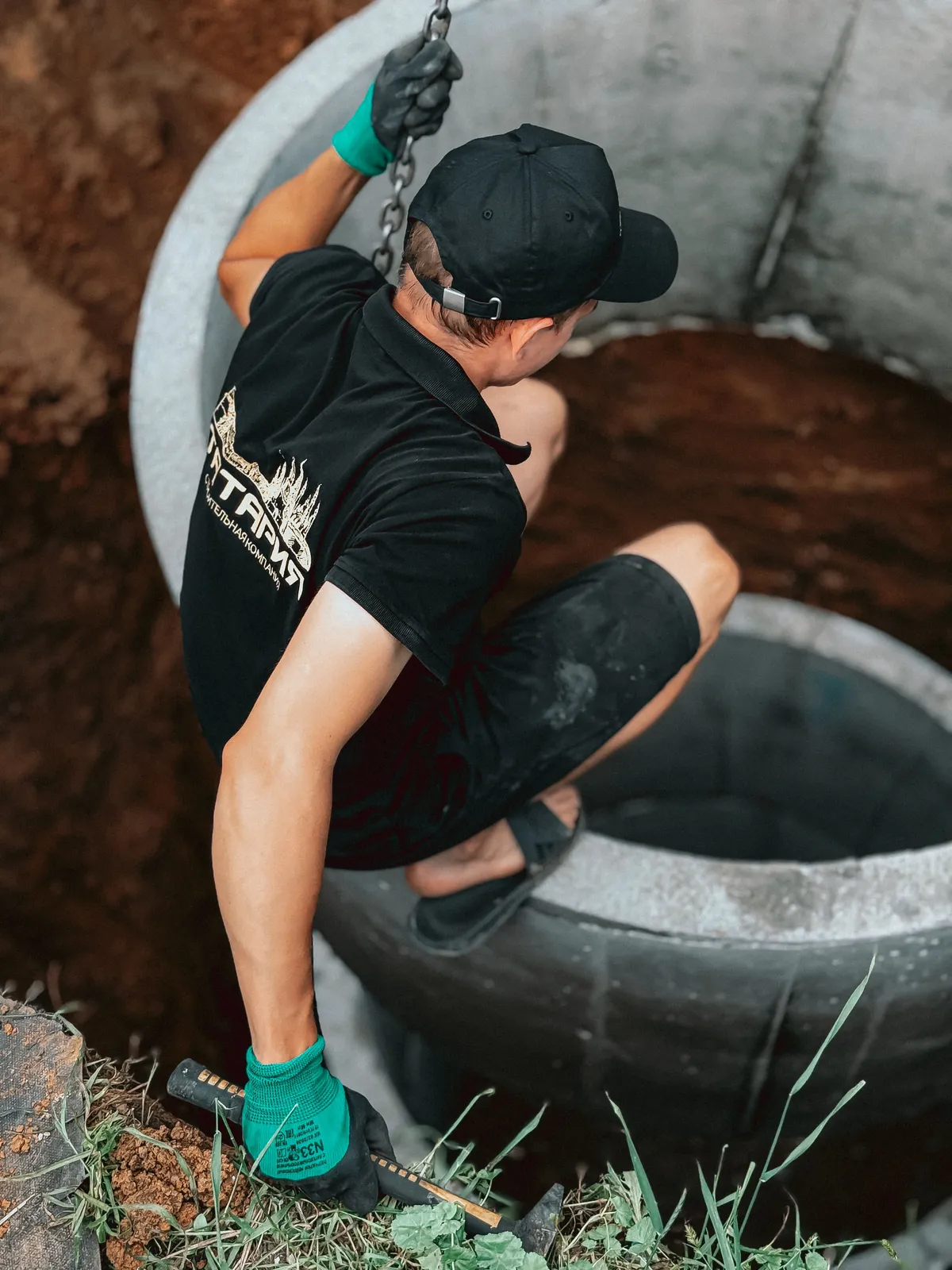
- 03Excavation and tank placementThe crew digs the tank hole and drain field trenches, sets the tank level, and connects it to the home’s sewer line.
- 04Drain field construction and backfillGravel or chamber units go into the trenches, distribution pipe gets laid on top, then everything gets backfilled and graded.
- 05Final inspectionThe county inspects the system before it’s covered for good and before it gets signed off as legally in service.
What it costs after the system goes in
Installation isn’t the last check you write. A conventional system needs pumping every three to five years, typically $200 to $500 a visit. An aerobic system adds a maintenance contract on top of that — usually $450 to $650 a year — because the mechanical parts (pump, aerator, sometimes a disinfection unit) need regular servicing that a gravity system doesn’t have.
That’s the real tradeoff between system types: aerobic costs more to install and more to run every year after. If your lot qualifies for a conventional system, it will almost always be the cheaper system over its full lifespan, not just at installation.
How to get an accurate number for your property
The range in this post is a starting point, not a quote. The real number depends on your soil, your lot size, and what your county requires — three things a phone call can’t tell you but a site evaluation can. See all our services or request a quote and we’ll walk the property with you before we put a number on anything.
For more on how the system works once it’s in the ground, see our guide to what a septic tank actually is, and the EPA’s breakdown of the different types of septic systems if you want the engineering detail behind why soil decides so much of this.